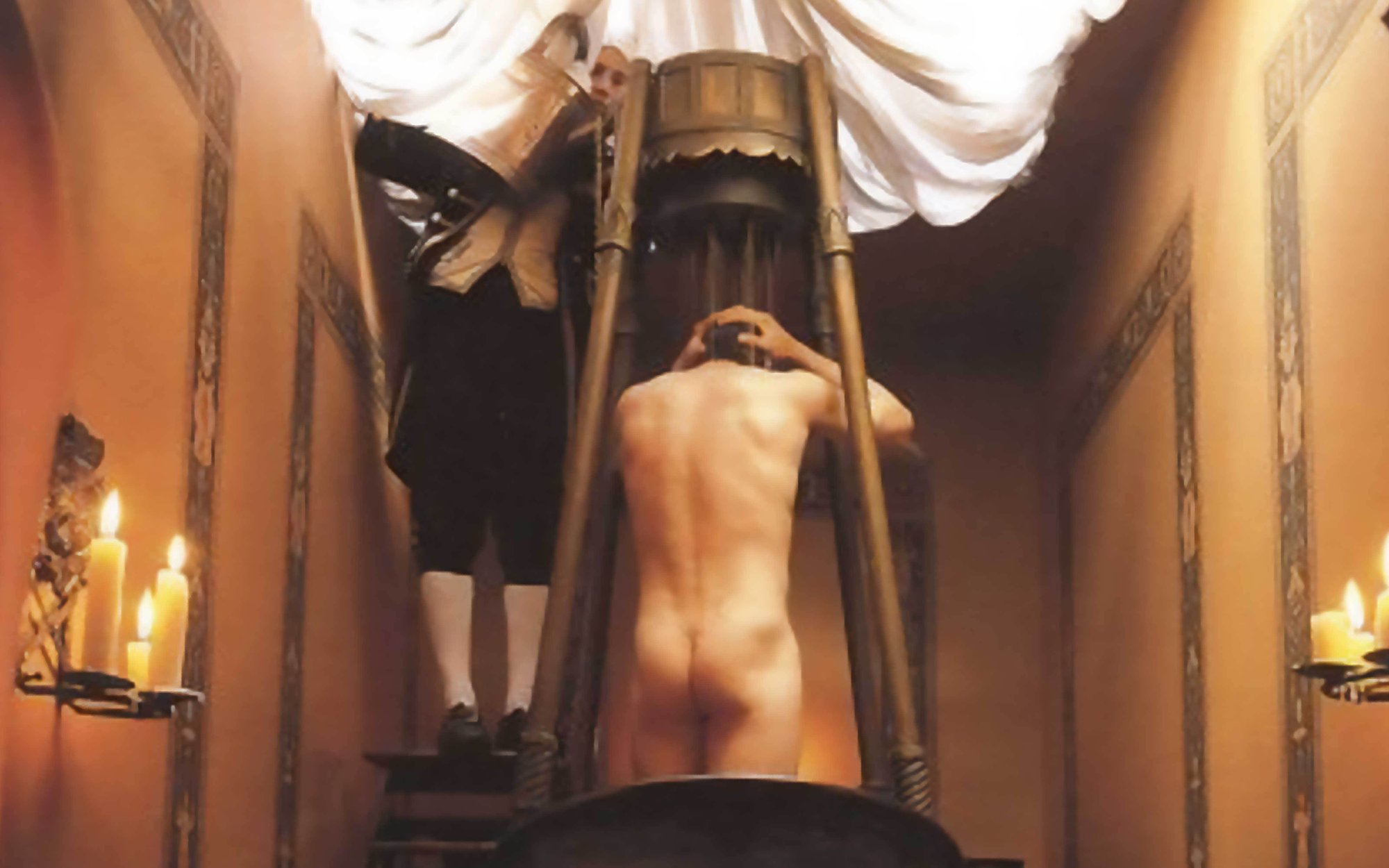
1700's

1767
Long before modern sustainability discourse, inventors explored ways to reuse bath water, demonstrating the closed-loop concept centuries ahead of practical technology.
His hand-pumped device drew water from a basin and sent it back overhead — a remarkable idea for its time, though the water was reused without treatment or temperature control.
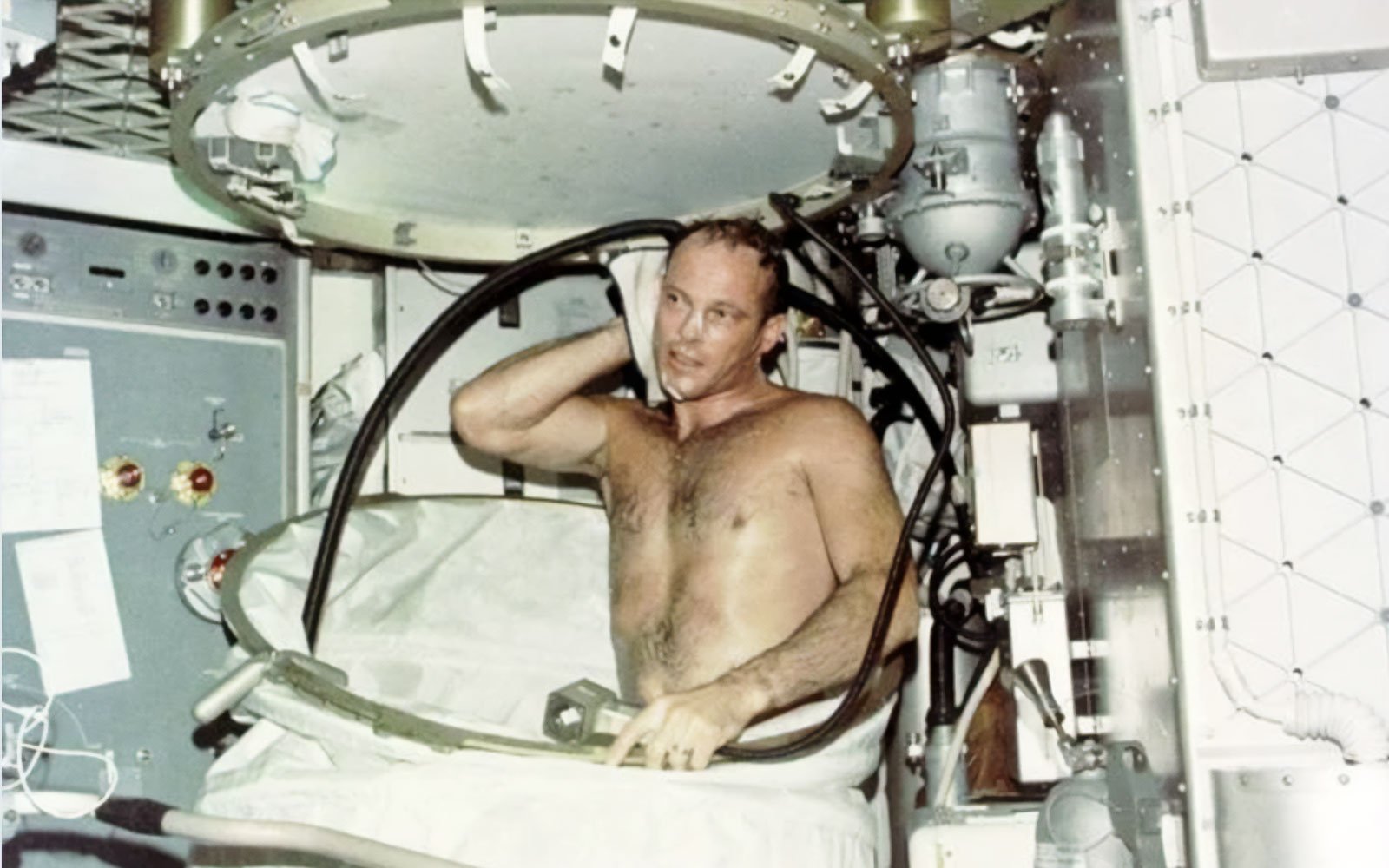
1973
This system, developed for zero-gravity hygiene, proved that even a few litres could be continually reclaimed and reused.
NASA wanted to make Skylab, the United States’ first space station, feel more like home, especially because astronauts would be living there for extended periods.
To make sure they did not float away, astronauts put their feet in foot restraints at the base of the shower. Then they attached a pressurized portable bottle of water to the ceiling, which connected to a hose and showerhead.
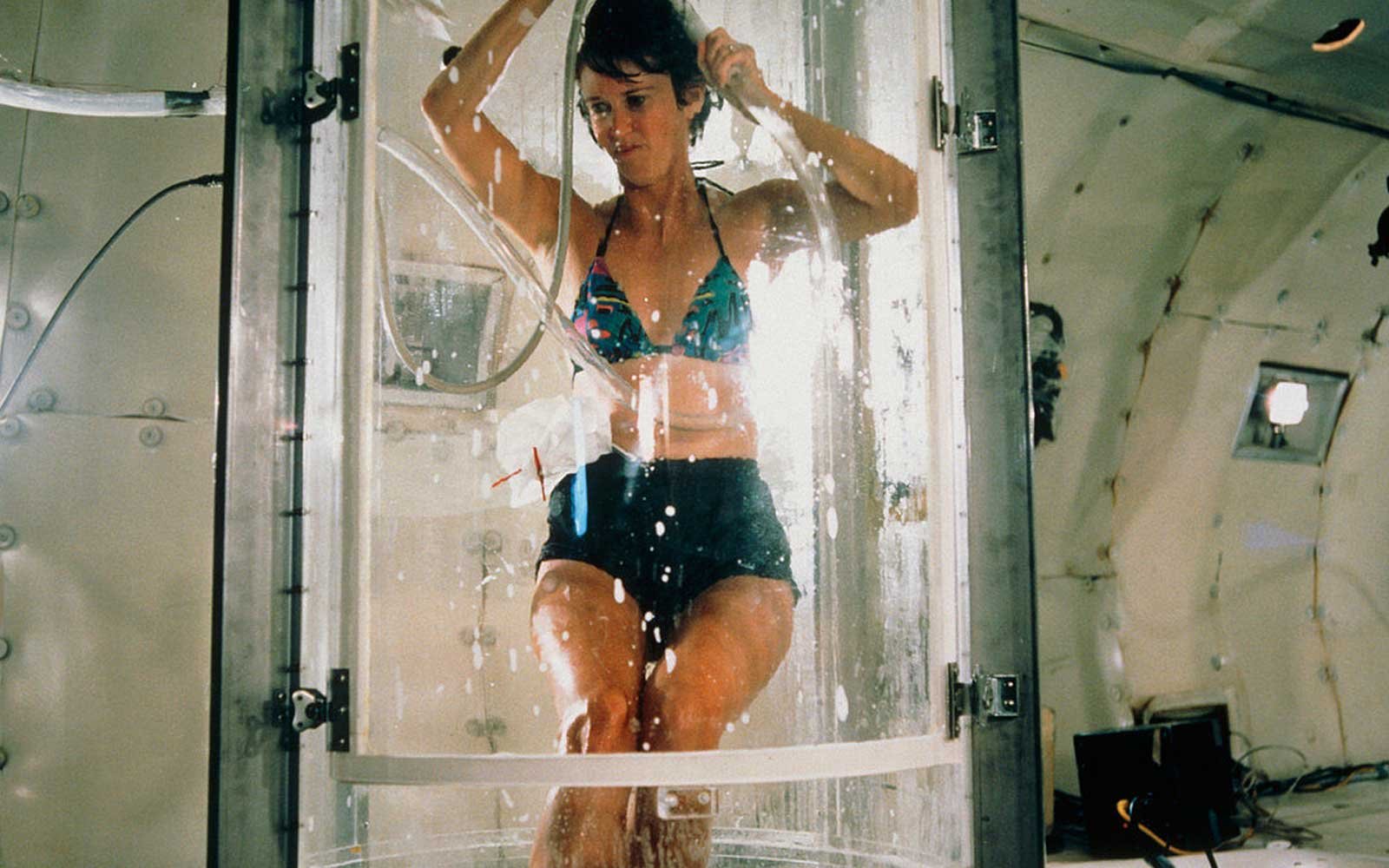
1990's
The Space Station Freedom project (the precursor to the ISS) designed a prototype Whole Body Shower for zero-gravity, featuring a, plexiglass cubicle with a handheld shower head, vacuum system to remove water, and foot restraints. This aimed to improve upon the impractical, time-consuming shower systems used in earlier projects like Skylab.
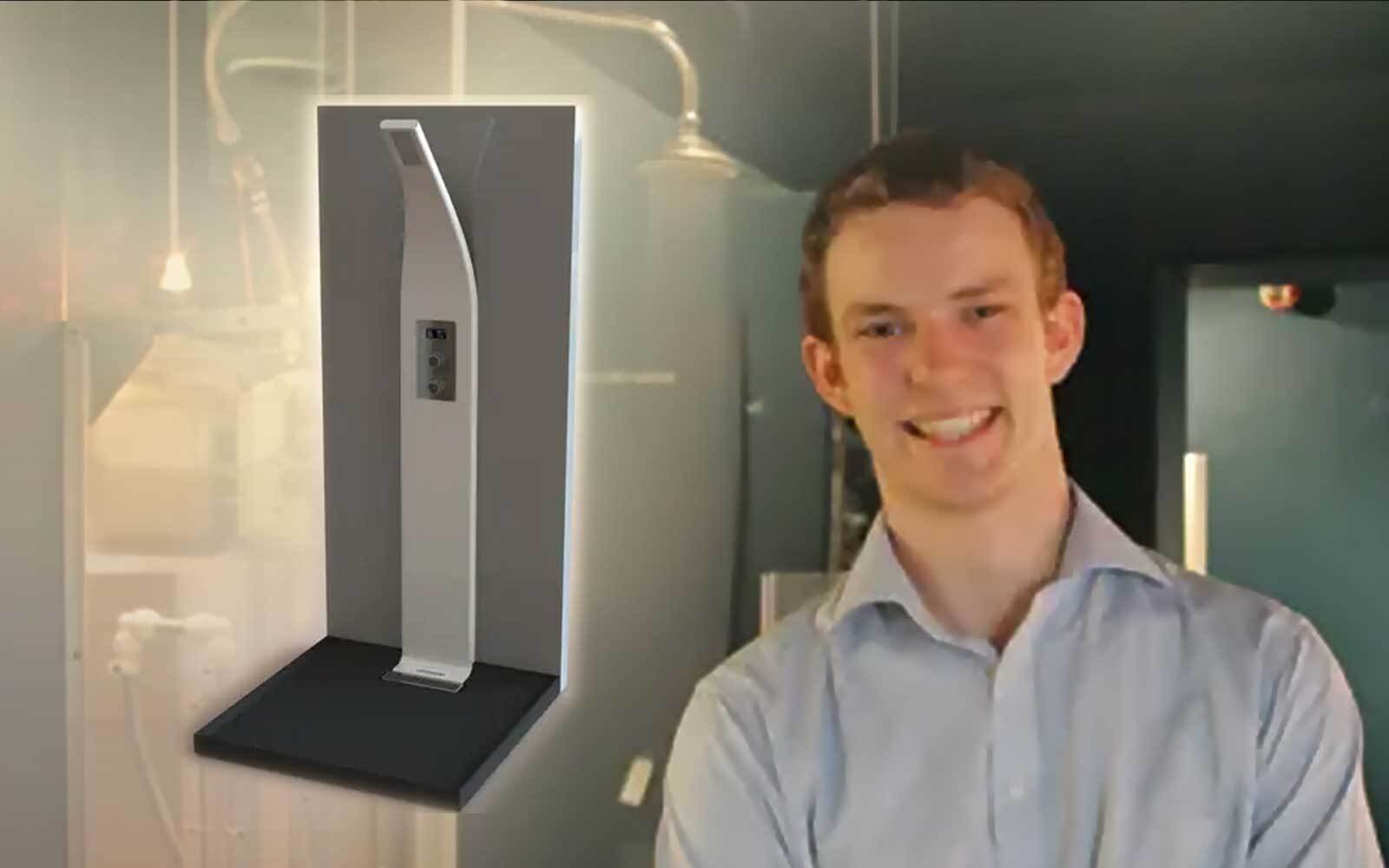
2005
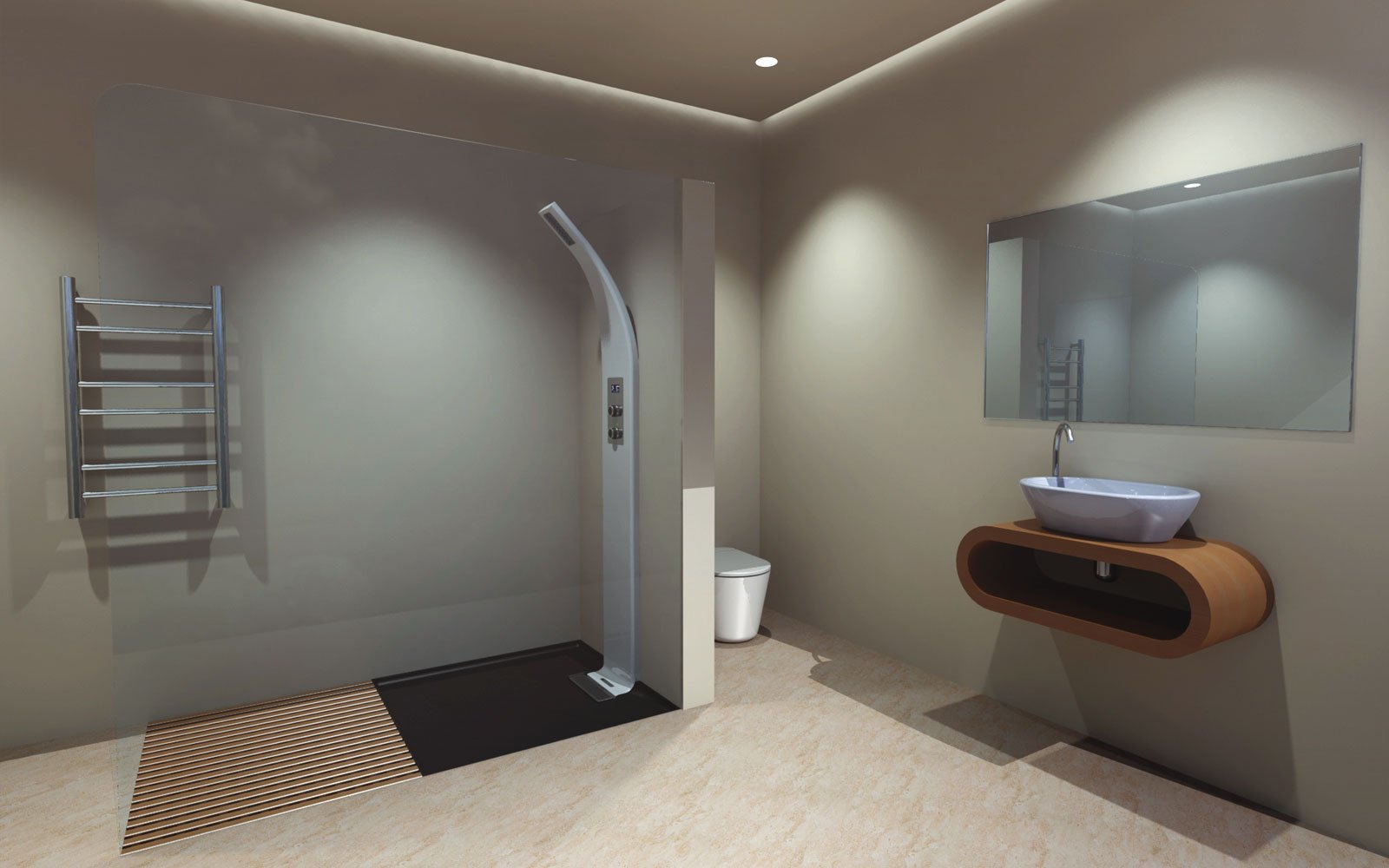
In 2005 Peter Brewin (UK) developed a prototype recirculating shower while studying Industrial Design Engineering at the Royal College of Art and Imperial College London.
The system cleaned, filtered, reheated and reused roughly 70% of the shower water in real time, reducing both water consumption and energy use by a similar margin.
2011
The system combined filtration with heat-pasteurisation — heating recycled water to around 72 °C to sterilise it before reuse — allowing the shower to reclaim roughly 70% of both water and energy.
The technology won the 2011 Postcode Lottery Green Challenge, demonstrating the commercial potential of circular shower systems, although the product ultimately did not reach mass production.

2012
The “Shower of the Future,” later branded Oas, employed NASA-inspired NanoCeram filters, UV sterilisation, and sensors to monitor quality, ejecting only contaminated water while recirculating the rest.
Tests indicated up to 90 percent water and 80 percent energy savings, with flow rates equal to or higher than conventional showers.
By 2015 Orbital had secured high-profile investors and awards, signalling a new commercial era.
2013
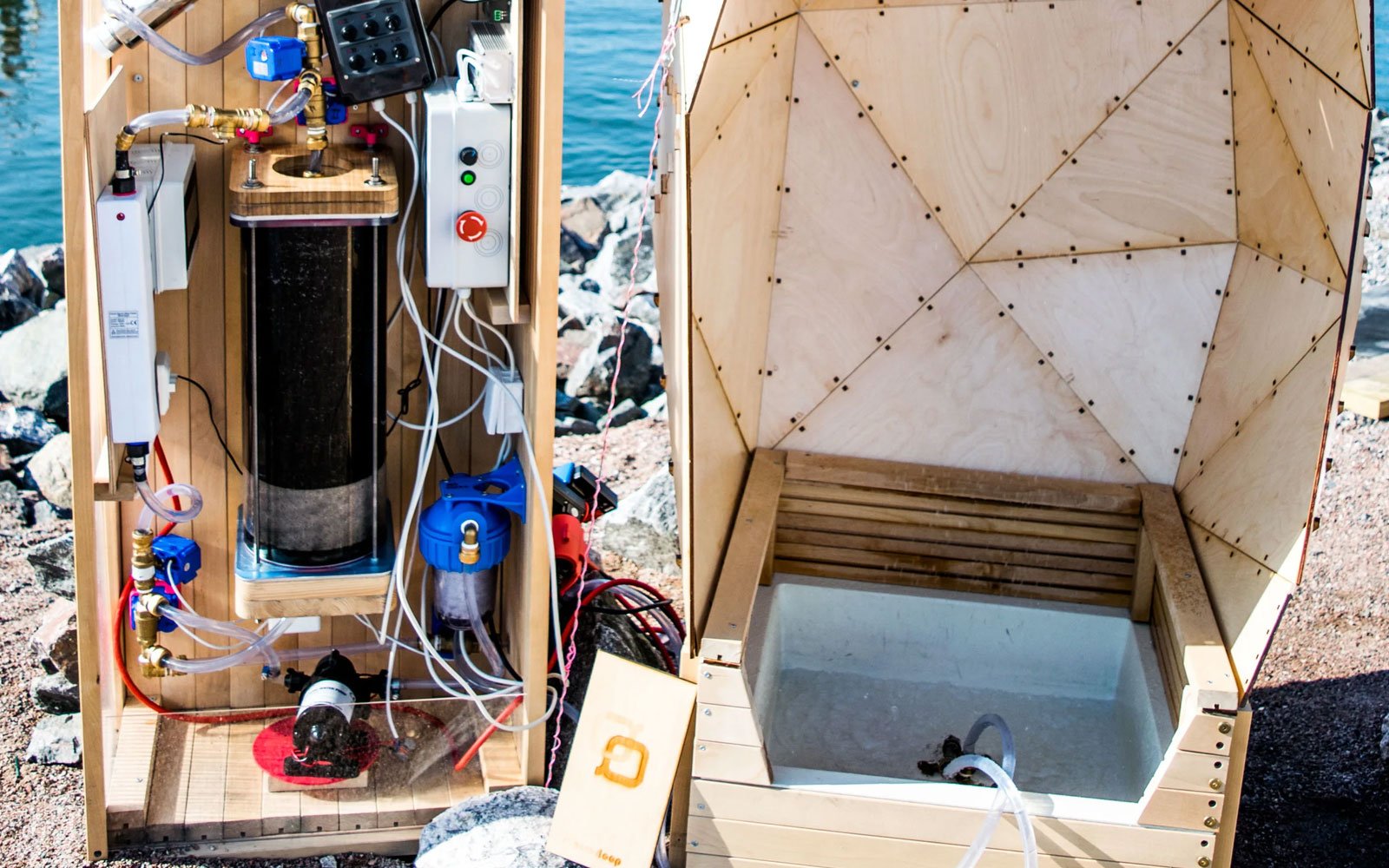
An open-source design community that shared plans for a DIY recirculating shower using multi-stage filters and UV-C sterilisation.
The project popularised the idea among engineers and van-life hobbyists and proved that low-cost recycling was possible with accessible components, even if not mass-produced.
2015
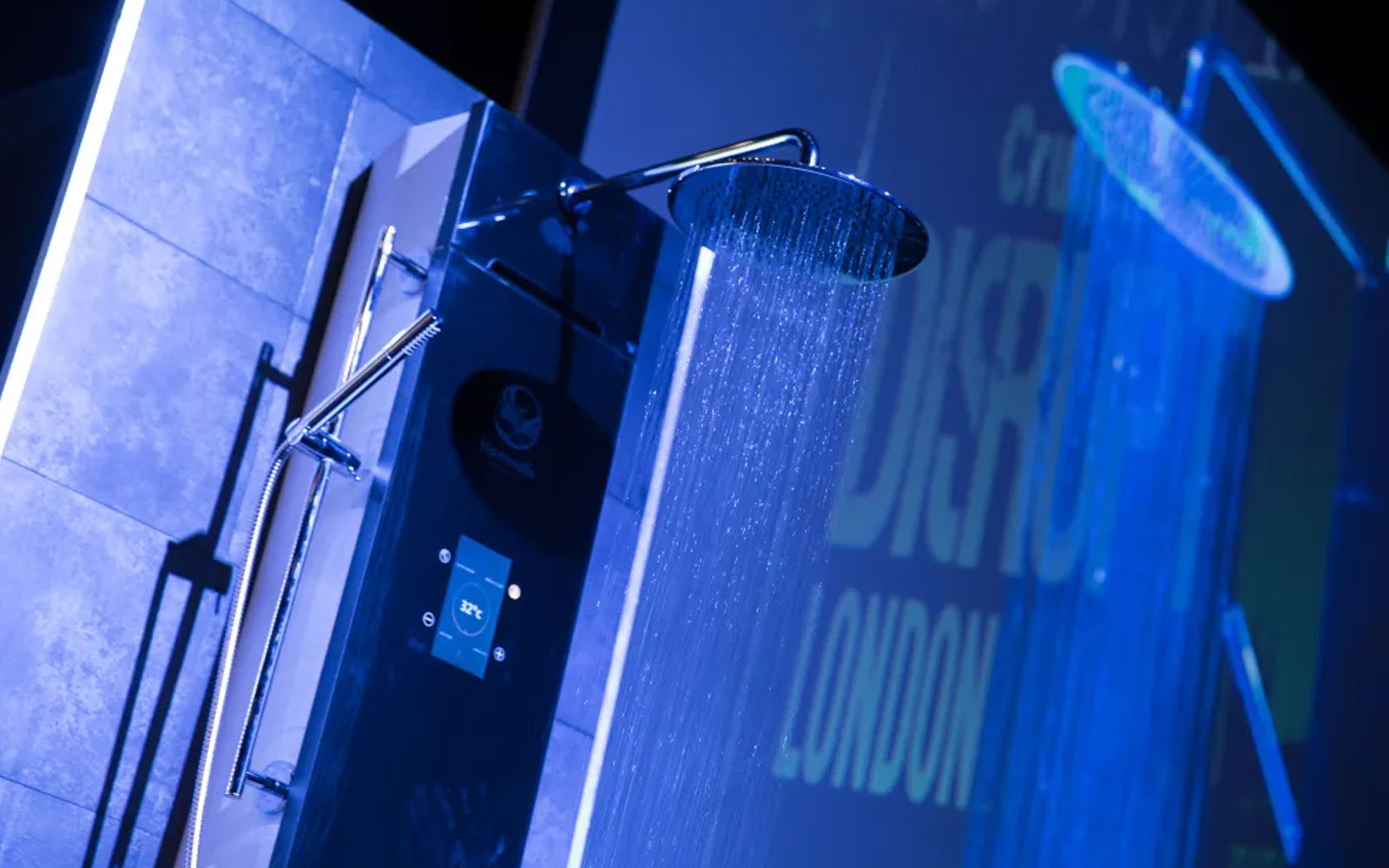
It allowed users to toggle between a standard “fresh-flow” mode and a “Refresh Cycle” that reused water several times through micro-filtration and UV treatment.
Additional features included app connectivity and self-cleaning cycles. Priced around €2,950, it targeted eco-conscious homeowners and early adopters.
2016
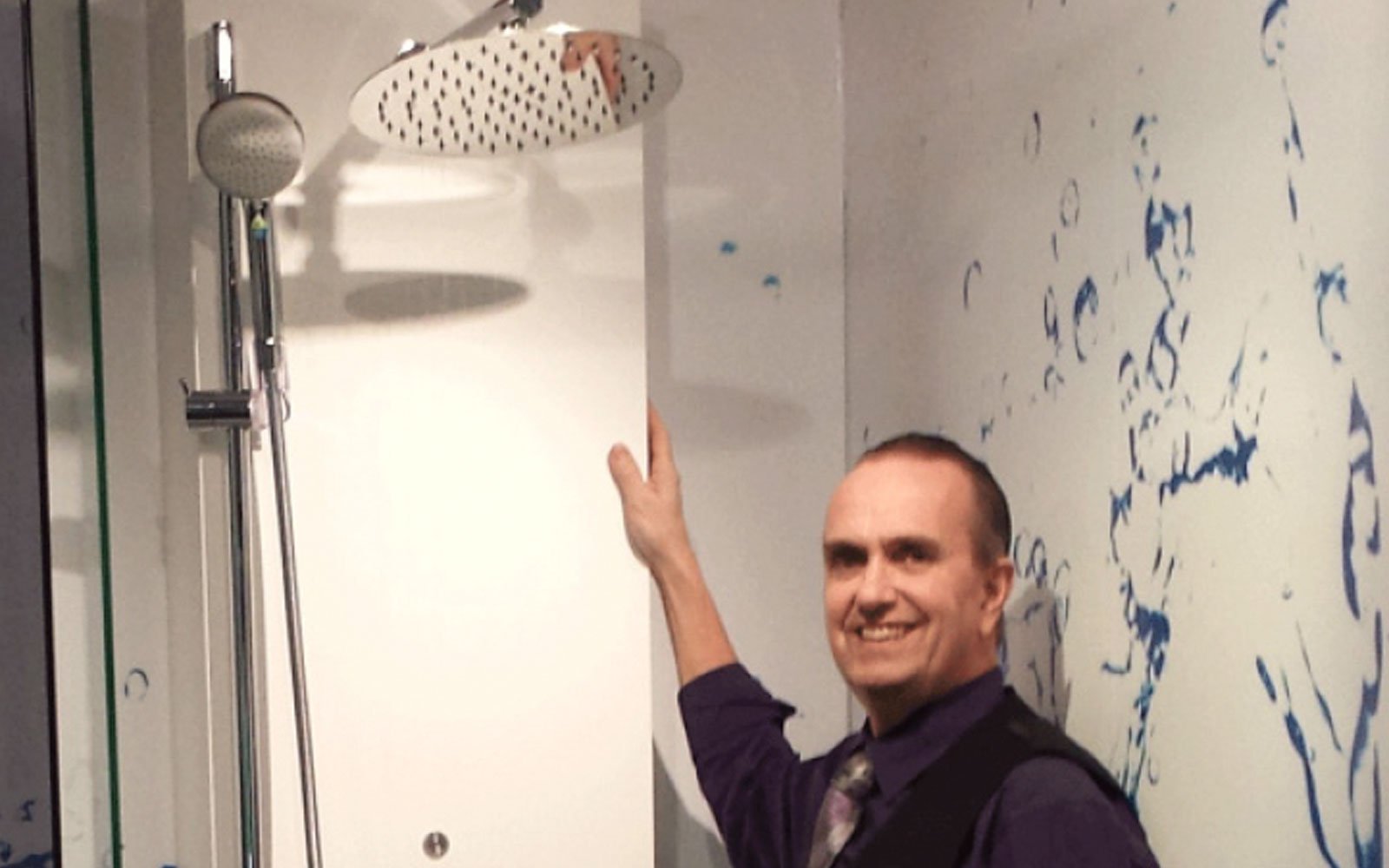
Dutch inventor René Betgem introduced the Upfall Shower, a high-flow rain shower that continuously filters and recirculates water during use. Using multi-stage filtration and UV treatment, the system could reduce water and energy consumption by around 80–90% while maintaining a luxury shower experience. The innovation attracted attention across the Netherlands and Europe, with more than a thousand units installed in homes and hotels, helping demonstrate that closed-loop showers could move beyond prototypes into real-world installations.
2016
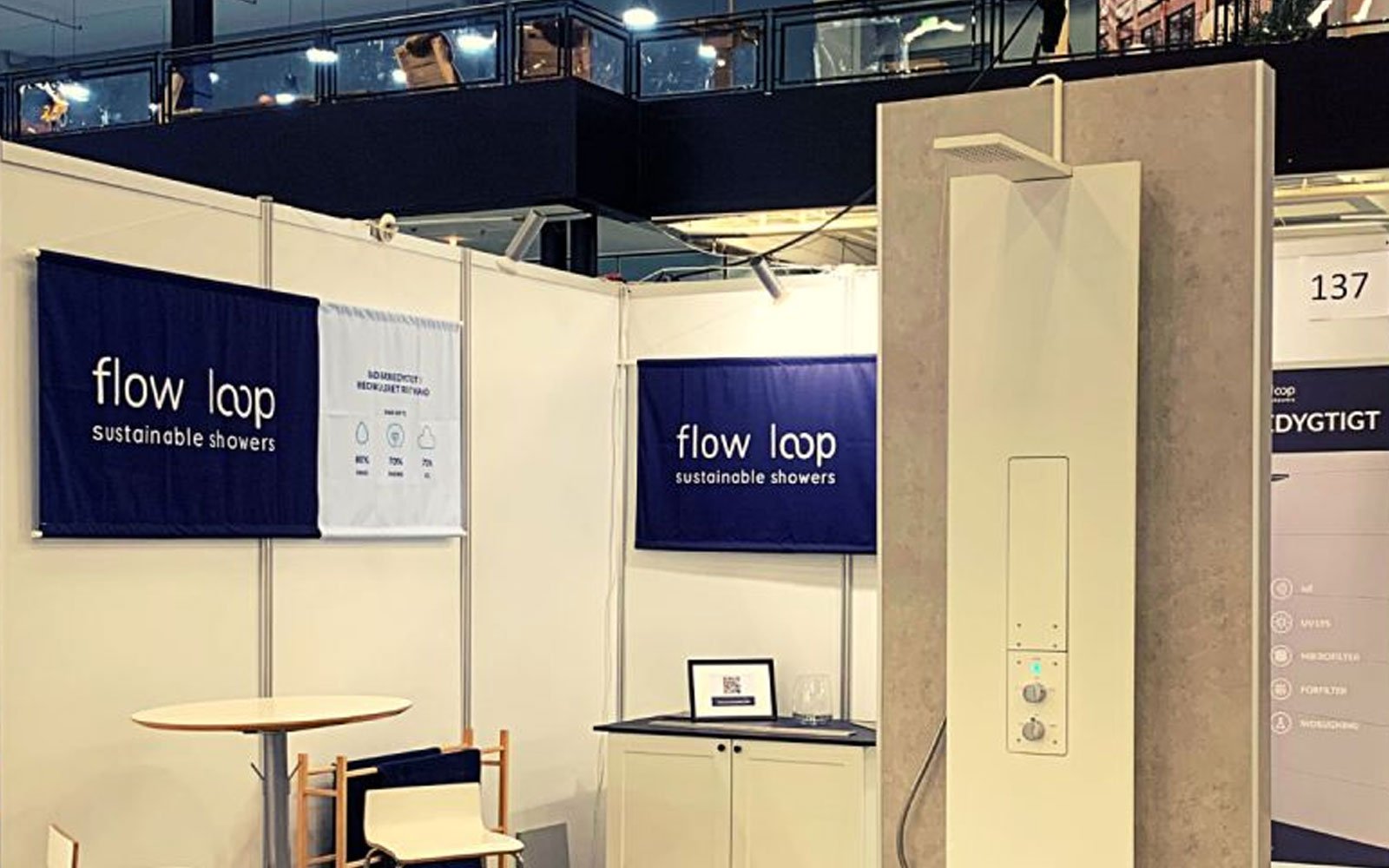
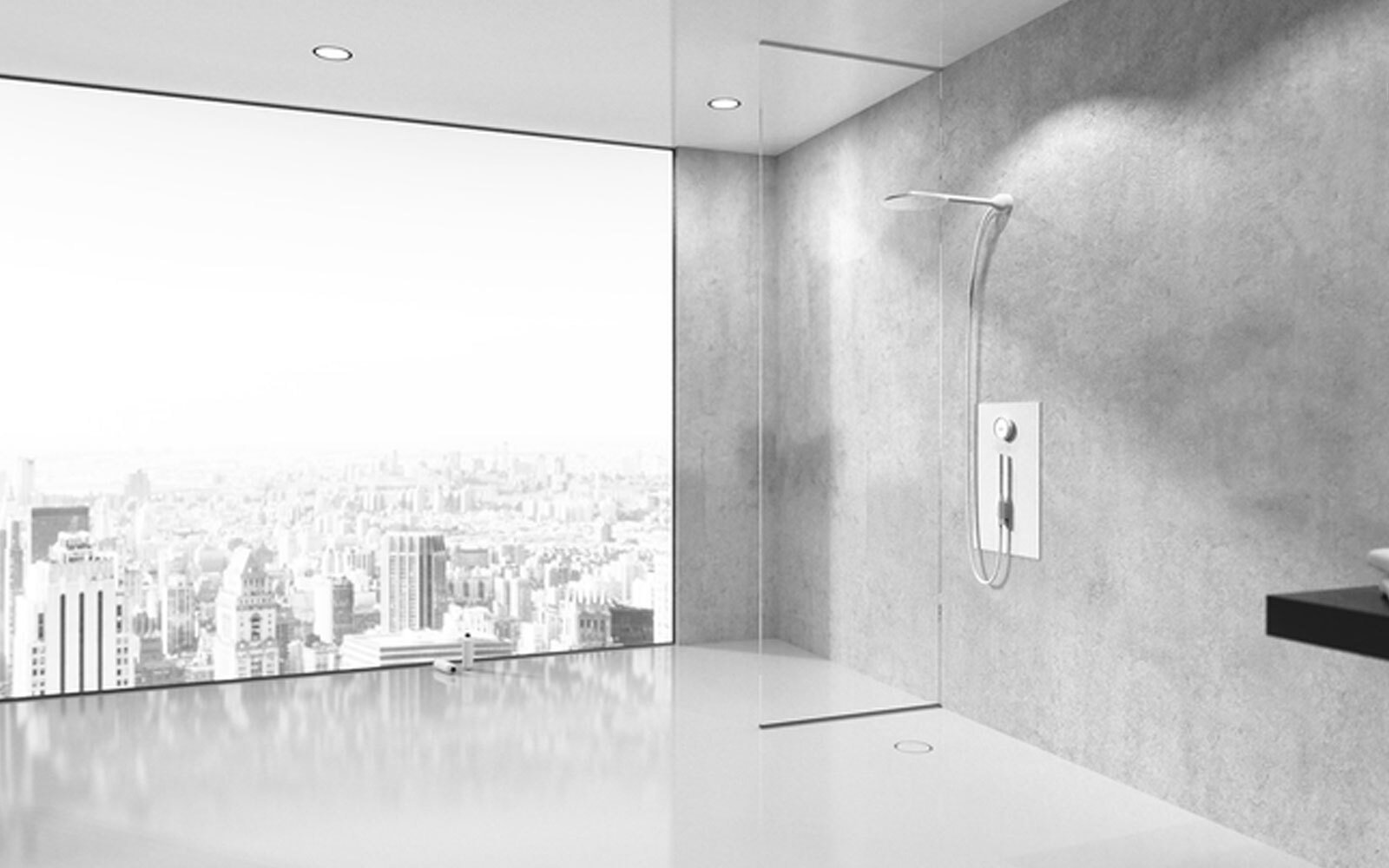
Designers Simon Kolff and Troels Grene founded Flow Loop ApS to develop a recirculating shower system designed to retrofit existing bathrooms.
The system uses a modular wall panel and smart drain cover to filter and UV-treat used shower water before returning it to the showerhead, while continuously adding a small stream of fresh water to maintain hygiene and temperature. The approach aimed to make circular shower technology easier to install without major plumbing changes.
2017
Swedish company Orbital Systems, founded by industrial designer Mehrdad Mahdjoubi, began commercial production of its Oas recirculating shower in 2017. Using advanced filtration, UV sterilisation and sensor monitoring inspired by space-habitat research, the system recycles most of the shower water while maintaining full pressure and comfort. Thousands of units were installed across Scandinavia and Europe, typically priced around US $3,500–$4,000, demonstrating early consumer demand for premium circular shower technology.
2017
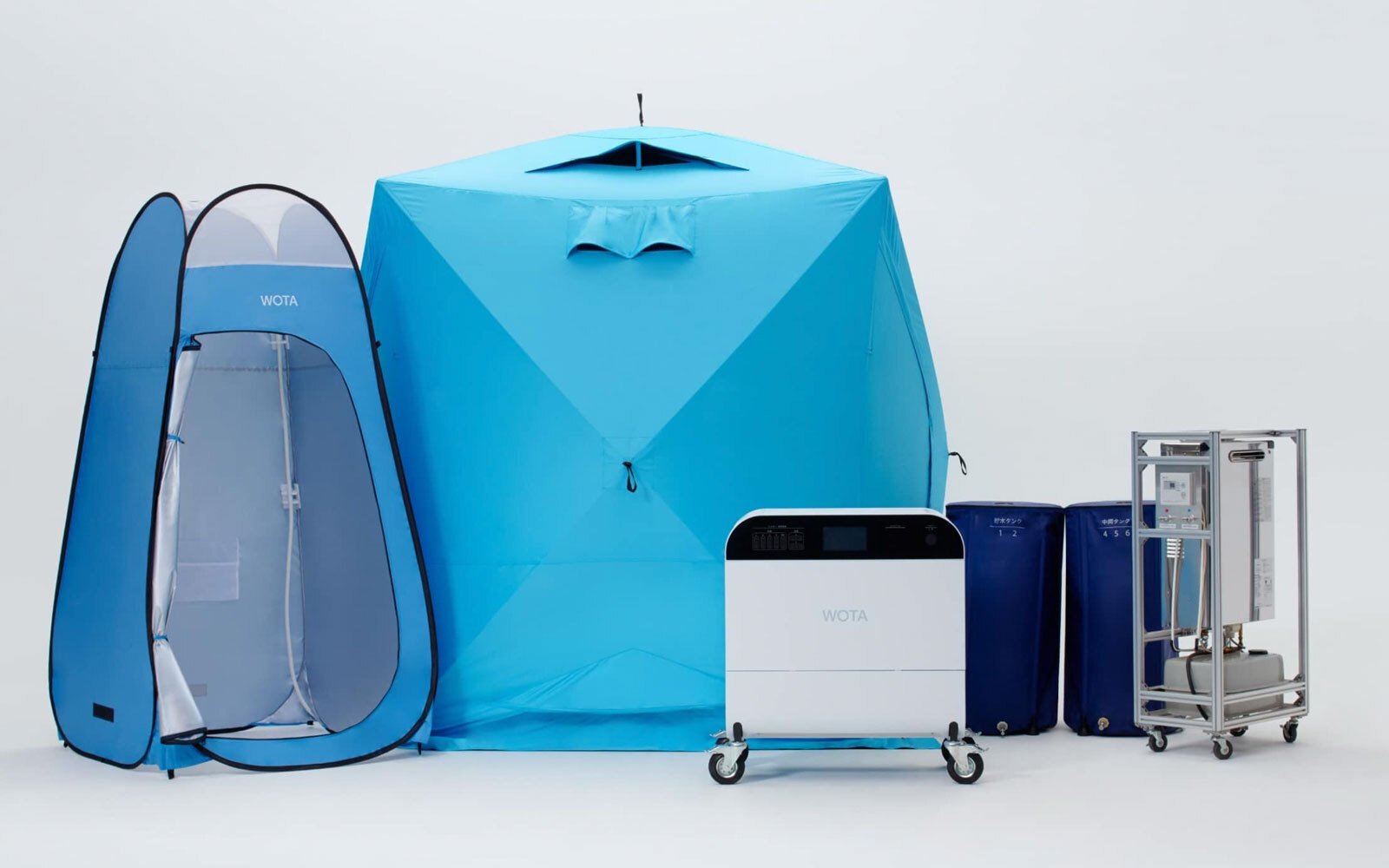
Engineers in Tokyo developed an early portable recirculating shower system known as Hotaru, designed for disaster relief and off-grid sanitation. Using compact filtration, sensors and water treatment technology, the system could recycle more than 95% of its water. The concept later evolved into WOTA Corp., whose WOTA BOX systems are now deployed in disaster zones and emergency shelters to provide showers where water infrastructure has failed.
2019
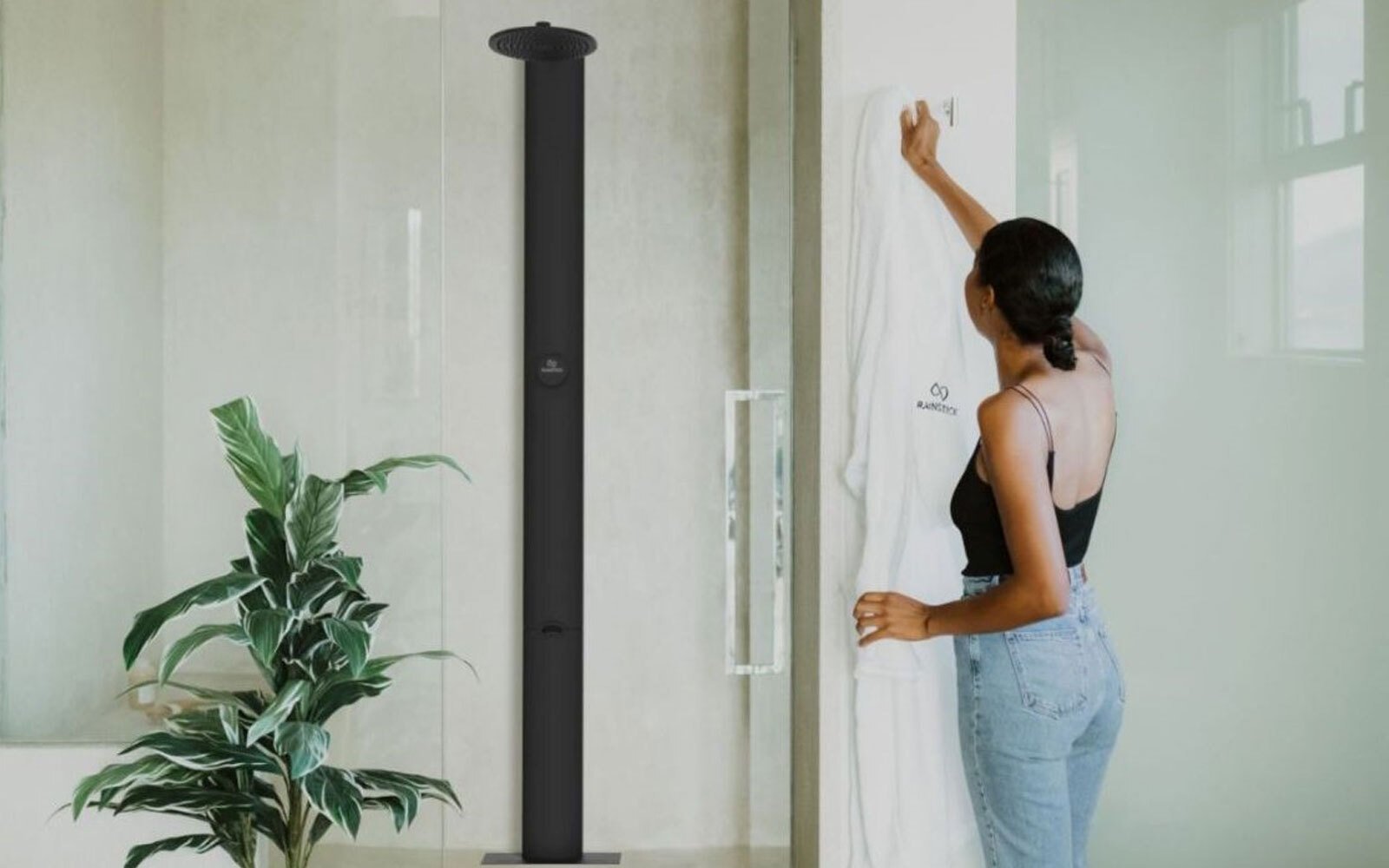
Canadian startup RainStick Shower, founded by Alisha and Sean McFetridge, developed a recirculating shower system designed to dramatically reduce water and energy use while maintaining a luxury shower experience. Using multi-stage filtration, UV treatment and smart monitoring, the system recycles roughly 80% of the water during use. The product moved from prototype development in 2019 toward commercial launch in the early 2020s, helping expand circular shower technology into the North American market.
2020
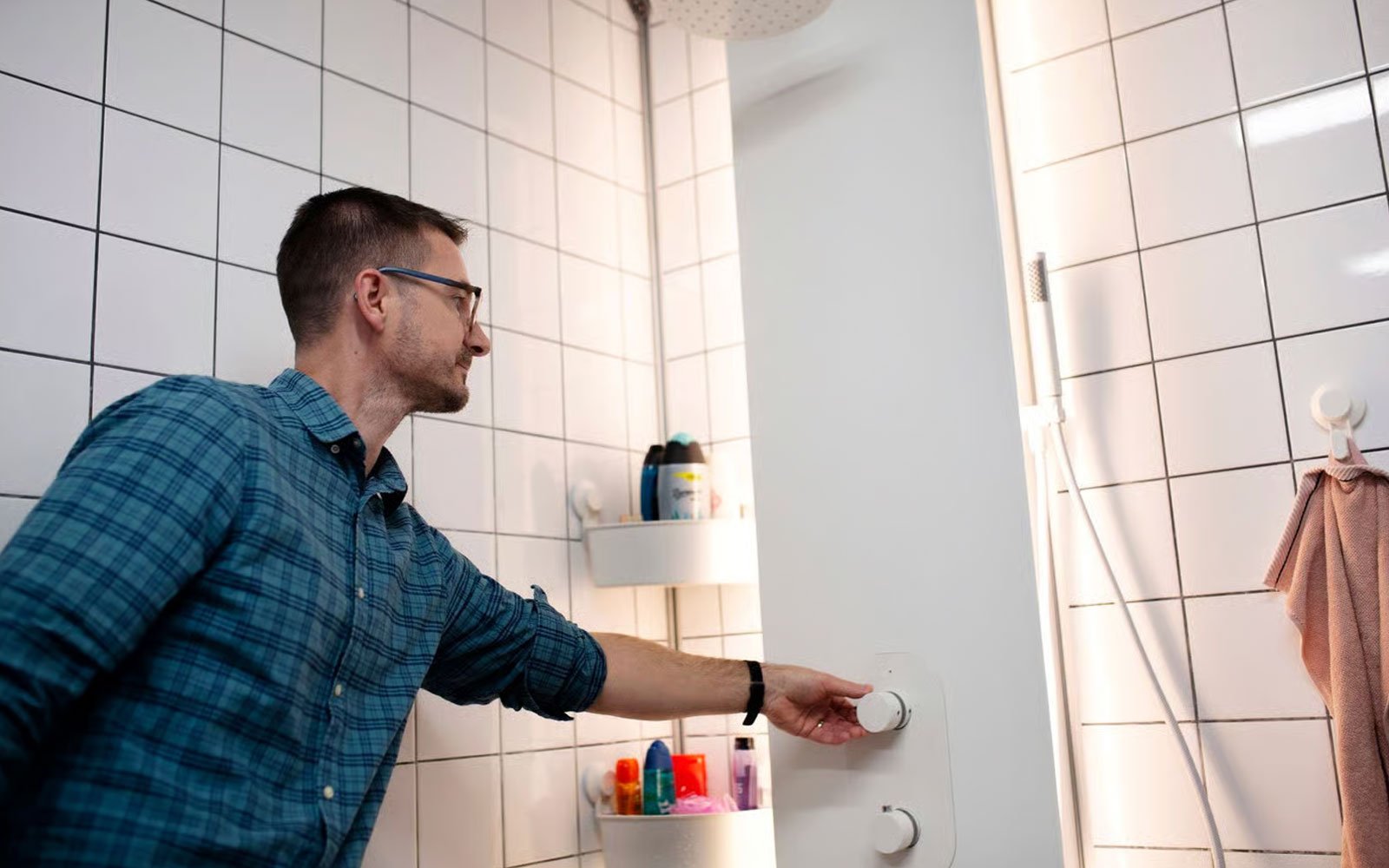
In 2020, Inter IKEA Group invested in Danish startup Flow Loop ApS to help develop a circular shower system designed for wider consumer adoption. The technology filters and UV-treats used shower water before recirculating it to the showerhead while adding a small flow of fresh water to maintain hygiene and temperature. The partnership aimed to refine the system for mass-market production, marking one of the first major investments by a global home brand in recirculating shower technology.
2021
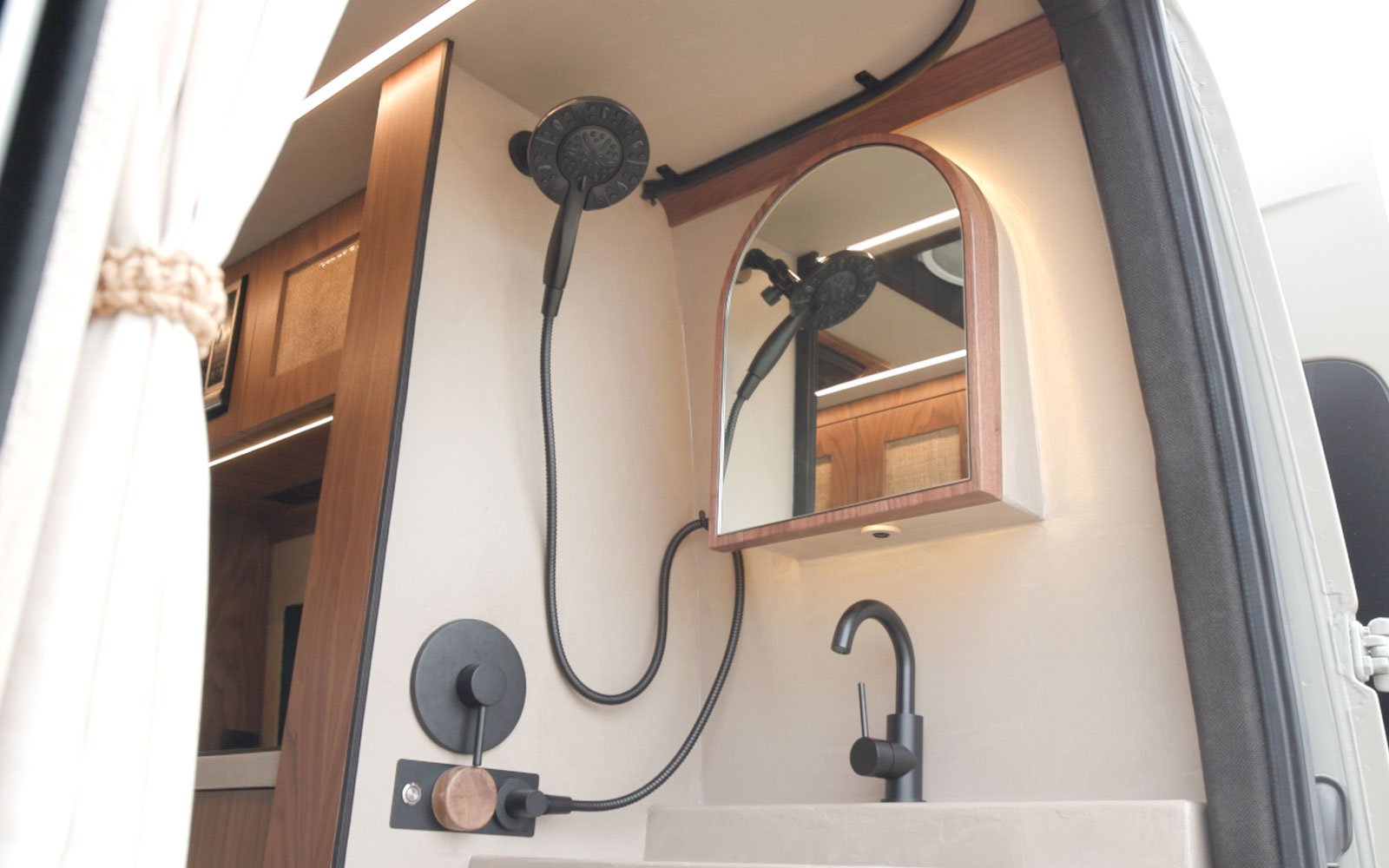
U.S. startup Sabbatical introduced the Infinity Shower, a compact recirculating shower designed for vans, boats and tiny homes. Using micro-filtration, UV treatment and a small recirculating pump, the system allows extended hot showers using only a few litres of water while offering a switch between fresh-water rinse and recirculation modes. The product quickly gained traction within the growing off-grid and mobile-living community.
2022
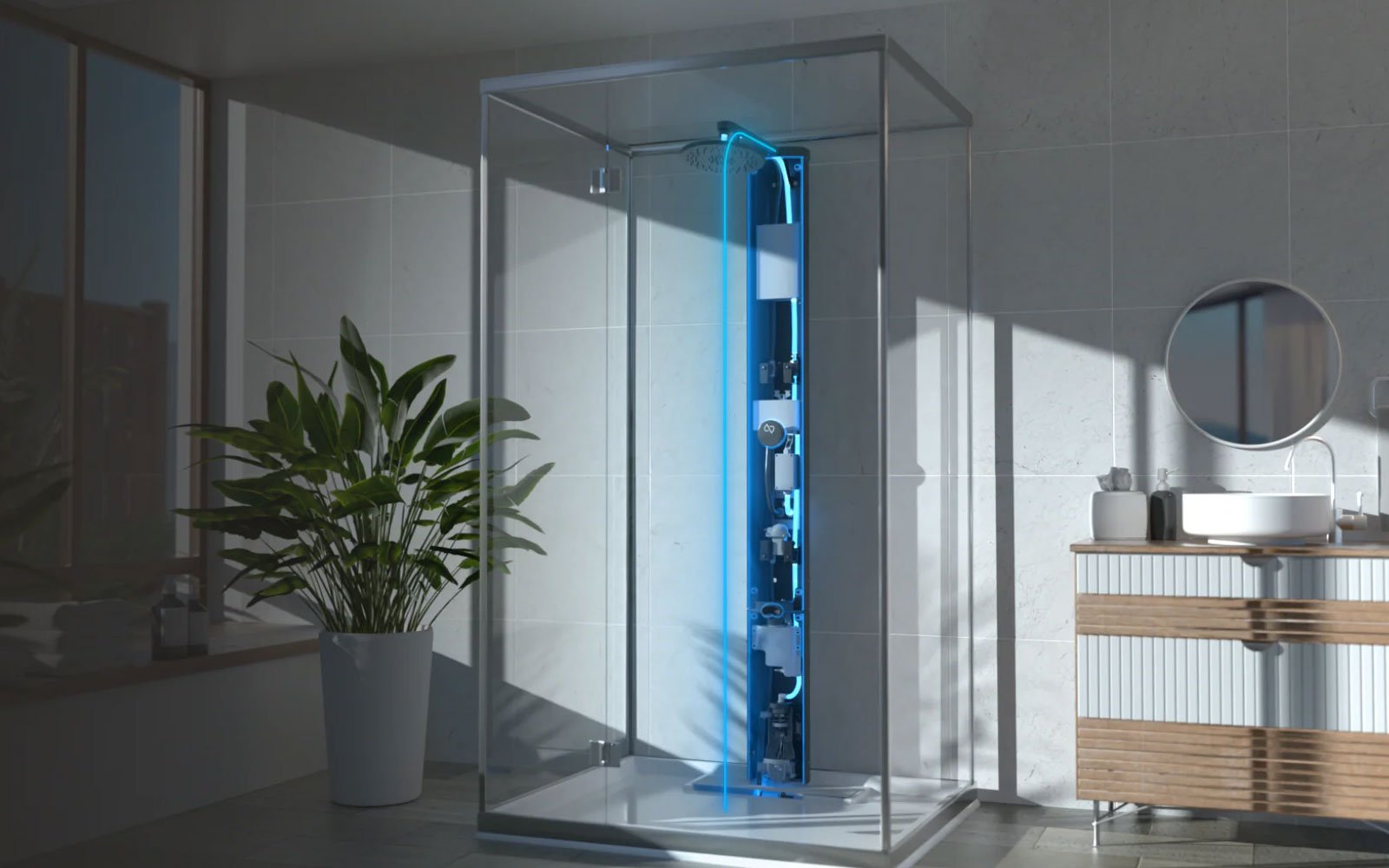
Canadian company RainStick Shower, founded by Alisha and Sean McFetridge, launched its commercial recirculating shower system after several years of prototype development. The wall-mounted unit filters and UV-sterilises shower water in real time, allowing about 80% of the water and energy to be reused while maintaining a high-pressure shower experience. The launch marked one of the first commercial circular shower products widely available in North America.
2025
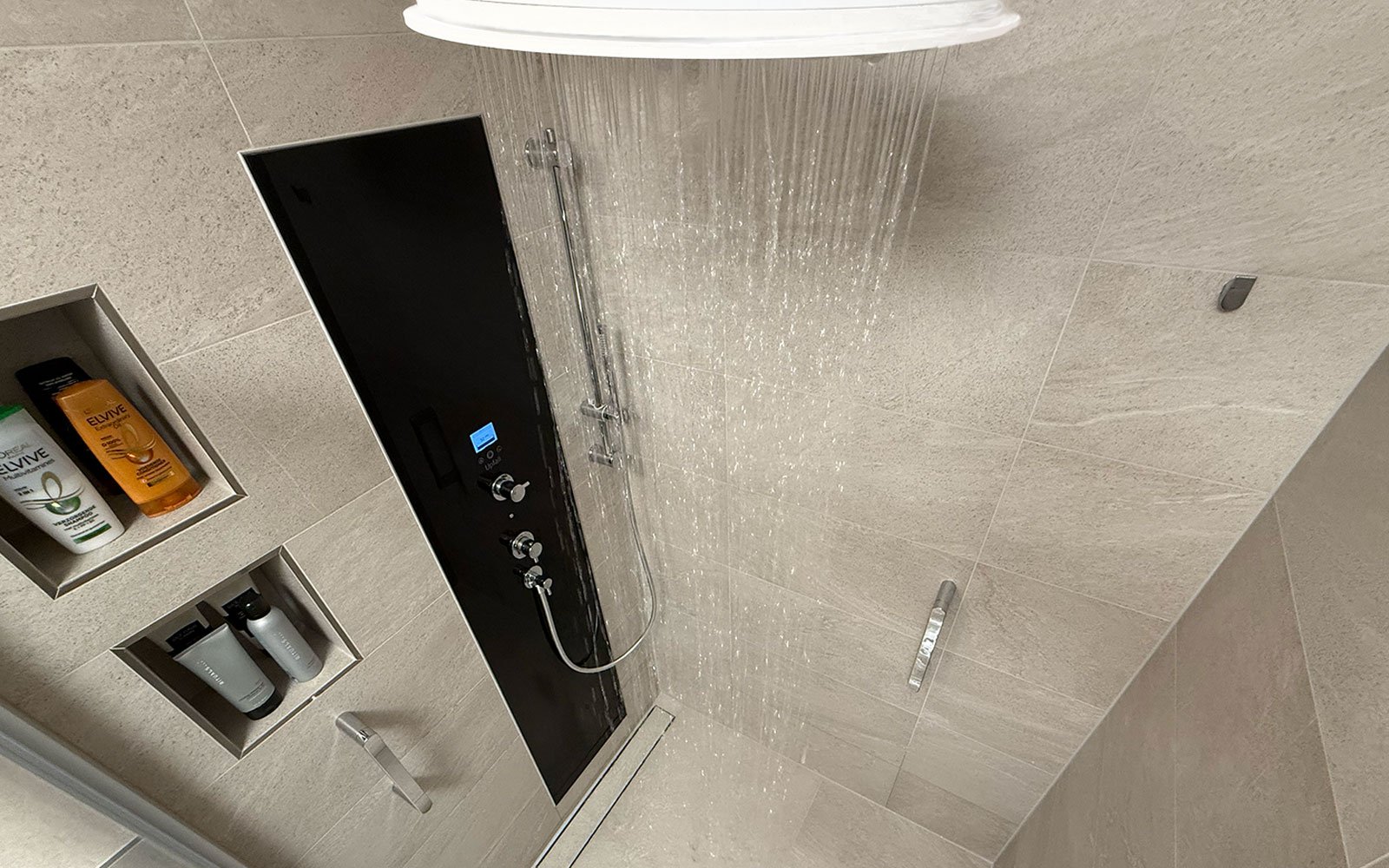
Dutch water-recycling company Hydraloop acquired the rights to the Upfall Shower technology originally developed by inventor René Betgem. The system, known for its high-flow rain shower experience while recycling most of the water through filtration and UV treatment, was integrated into Hydraloop’s broader home water-recycling ecosystem. The partnership signalled growing industry consolidation and increasing interest from established water-technology companies in circular shower systems.
